Is Robotic surgery right for me?
10 Apr 2026
Robot-assisted laparoscopic surgery represents the next evolution, especially for complex gynaecological conditions
Current high-level evidence demonstrates that robotic and conventional laparoscopic surgery offer comparable outcomes for most benign gynaecological procedures.
However, robotic technology may provide important technical advantages in more complex cases, allowing surgeons to operate with greater precision in anatomically challenging situations, while maintaining similar safety profiles. The value of robotic surgery lies not in replacing conventional laparoscopy, but in extending the boundaries of minimally invasive surgery in appropriately selected patients.
Does the robot do the surgery?
No.
I perform every step of your surgery in the surgeon console next to the operating table.
The robot is simply a tool that enhances my ability — giving me superior vision, precision, and control. Think of it as keyhole surgery, but supercharged.
What makes robotic surgery different?
1. High-definition 3D vision
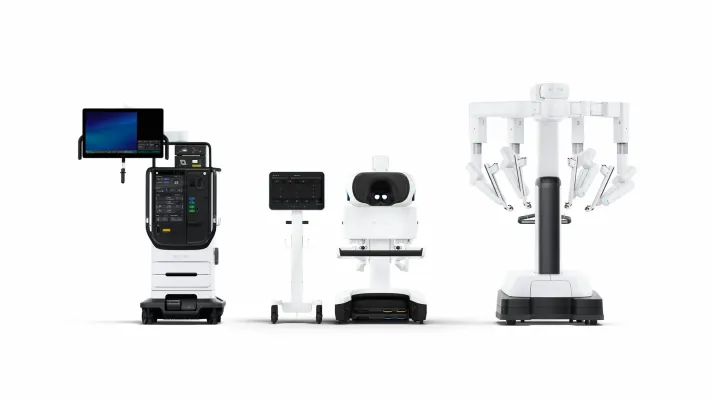
Unlike standard 2D laparoscopy, robotic systems like the da Vinci Xi surgical system provide a magnified, three-dimensional view.
This allows me to see tiny endometriosis lesions, delicate nerves, and fine anatomical planes that may otherwise be difficult to detect.
2. “Wristed” instruments
Robotic instruments move with greater flexibility than the human wrist (7 degrees of freedom). This is especially important when:
a. Suturing deep in the pelvis
b. Performing complex myomectomies
c. Operating around critical structures like the bowel, bladder, and ureters
What are the advantages to robotic assisted surgery?
- Less disruption to surrounding tissues
- Less postoperative pain
- Faster recovery
- Reduced blood loss
- Lower complication rates
- Shorter hospital stay
- Lower overall cost of care (when considering recovery and readmissions)
When do we use robotic surgery in Gynaecology?
Robotic surgery is particularly valuable in complex gynaecology, including:
1. Severe (Stage 4) endometriosis
Precise dissection around the bowel, bladder, ureters, and nerves.
2. Large or multiple fibroids
Careful removal and meticulous reconstruction of the uterus to preserve fertility.
3. Hysterectomy for a large uterus
Allows a minimally invasive approach, avoiding a large abdominal incision.
Are there any disadvantages?
Unlike open surgery, there is no tactile (touch) feedback and I cannot physically “feel” tissue. Instead, I rely on advanced visual cues and experience — something that comes with high surgical expertise. However, the introduction of DaVinci 5 that is coming to the Australian market will address this.
Is Robotic surgery right for everyone?
Not always. Robotic surgery is a powerful tool however, it is not a one-size-fits-all solution when it comes to tailored surgical care in meeting your needs. What matters most is choosing the right approach for you, performed by a surgeon experienced in managing complex gynaecological conditions.
The best surgical approach depends on:
- Your specific condition
- The complexity of your disease
- Your previous surgeries
- Your goals (e.g. fertility preservation)
When Open Surgery May Be the Preferred Approach
While minimally invasive and robotic techniques have transformed modern gynaecological surgery, there remain important situations where open surgery (laparotomy) is the most appropriate and safest option.
1. Extensive disease burden
In cases involving very large fibroids, significantly enlarged uterine size, or dense intra-abdominal adhesions, an open approach may provide improved access and operative safety. This allows for careful dissection when minimally invasive visualisation or instrument reach may be limited.
2. Suspicion of malignancy
When there is concern for gynaecological malignancy, an open approach may be recommended to ensure optimal oncological outcomes. This includes minimising the risk of tissue disruption and allowing for comprehensive surgical staging where indicated.
3. Significant prior surgical history
Patients with multiple previous abdominal surgeries may have extensive adhesions, increasing the risk of injury during laparoscopic entry. In such cases, an open approach may offer a safer operative pathway.
4. Intraoperative considerations
Even when a minimally invasive approach is planned, there are circumstances where conversion to open surgery is necessary. This is not a complication, but rather a considered decision made in the interest of patient safety when optimal visualisation or safe progression cannot be maintained.
A Patient-Centred approach
The choice of surgical technique should always be individualised, taking into account the patient’s condition, surgical complexity, and overall goals of care. The aim is not to prioritise one approach over another, but to select the method that offers the highest level of safety and the best possible outcome.
Dr Inge Putri is committed to providing tailored, evidence-based care, with a focus on achieving optimal outcomes while minimising surgical impact — particularly in the management of complex gynaecological conditions